

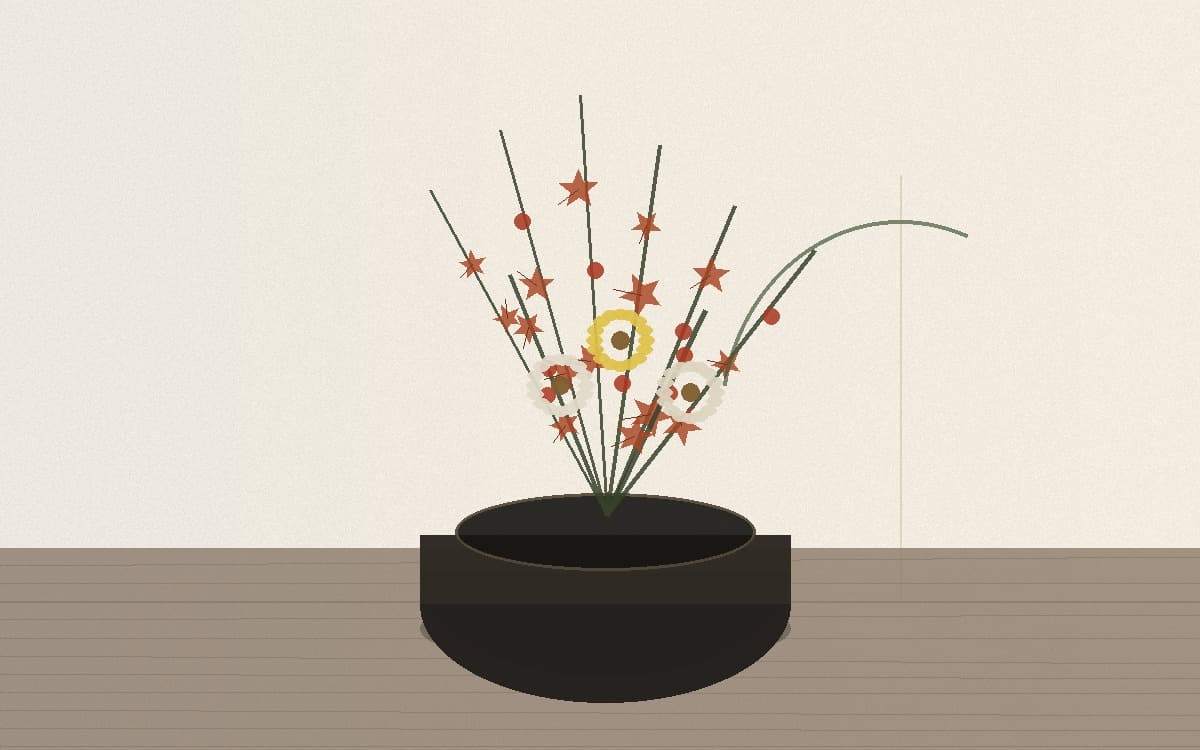
The angle of a single branch can sometimes express an entire season.
Ikebana is not simply the art of arranging flowers into an attractive bouquet. The direction of a branch, the place a leaf occupies in space and the flower's state of blooming or fading all shape the composition's meaning.
Reduction in this art is not visual poverty, but concentration. A few branches and flowers, placed with care, can carry the spirit of a season, the passage of time and humanity's attentive relationship with nature.
In an ikebana arrangement, empty space is not a passive interval between objects. It is where every form breathes and the viewer's gaze slows down. Known as ma in Japanese aesthetics, this interval gives the composition depth.
In workshops and demonstrations, ikebana offers participants not only technical knowledge of arrangement, but also a practice of seeing and waiting. The flower's life is finite, and that very finitude makes the work all the more powerful.