

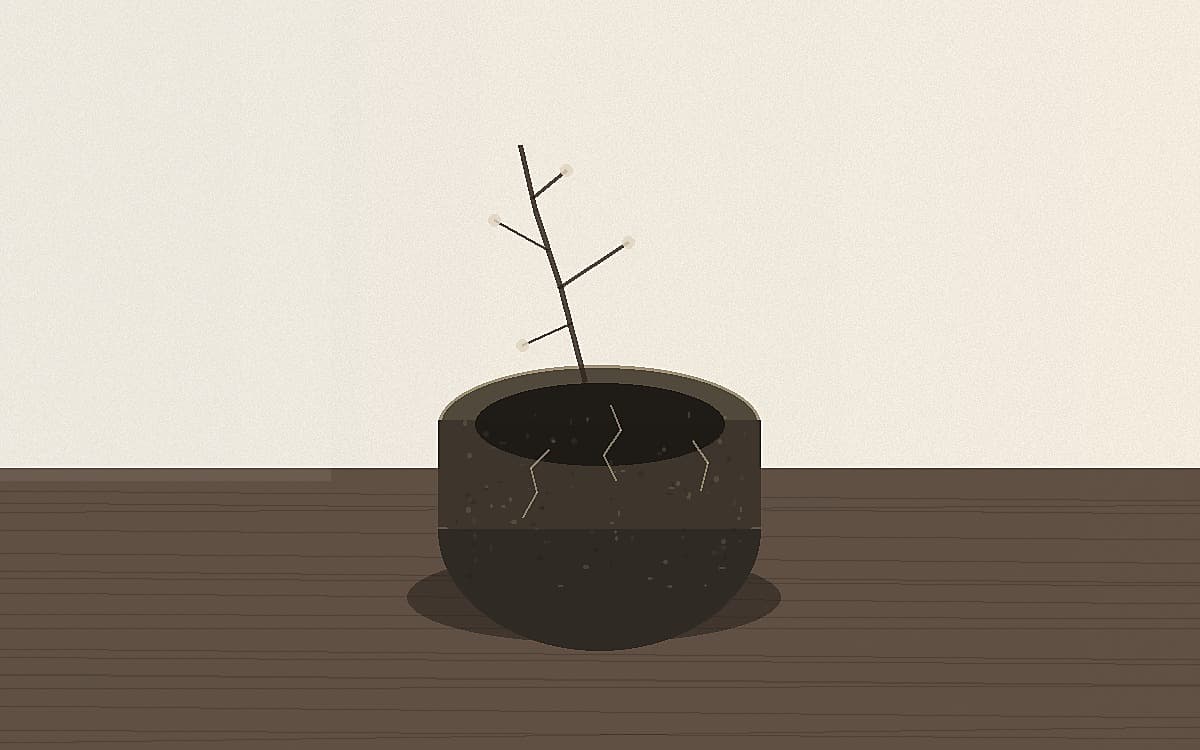
Beauty deepens when it finds harmony with imperfection rather than concealing it.
Wabi-sabi looks for beauty not in polished surfaces, but in worn textures, unfinished lines and forms that do not resist time. It sees an object not merely as an aesthetic form, but as a vessel for lived experience.
A crack in a tea bowl, the bend of a dry branch or the colour of a fading leaf can transform marks that might be called flaws into a quiet field of meaning. In Japanese art, this sensibility draws back from spectacle and directs attention towards silent detail.
Wabi-sabi asks the viewer not for instant admiration, but for slow recognition. The space around an object, the way light falls across its surface and the material's process of ageing are as much a part of the composition as the form itself.
In the Association's programmes, wabi-sabi opens a broad field of thought stretching from ceramics and architecture to tea culture and contemporary practice. This aesthetic invites us not only to understand Japanese art, but also to soften the way we look at beauty.